WMU Marks 10th Maritime Business Integrity and Corruption Awareness Seminar
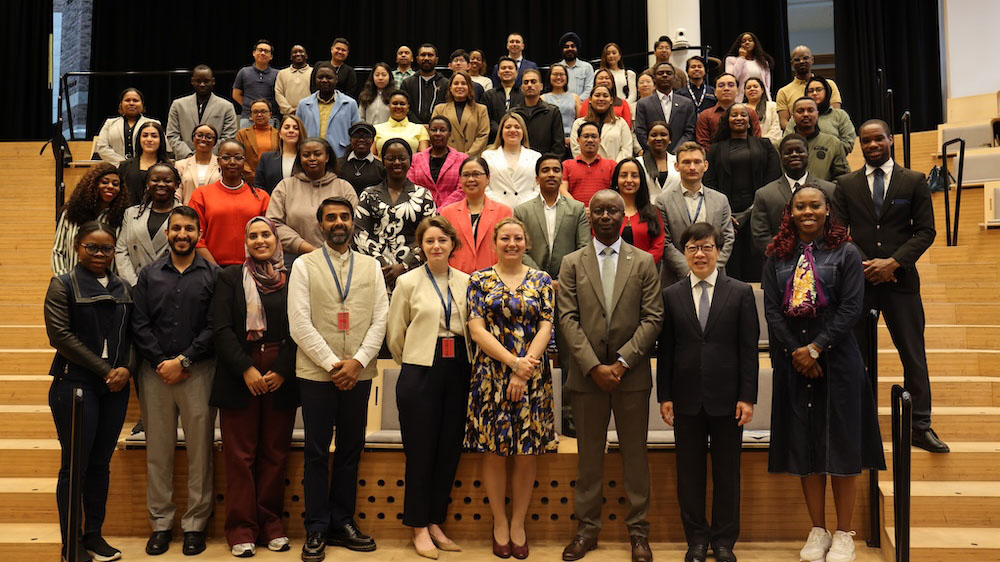
The World Maritime University (WMU) marked the tenth anniversary of its Maritime Business Integrity and Corruption Awareness (CORA) Seminar on 7 July, bringing together experts from academia, industry and government to examine the continuing challenge of corruption in the maritime sector. Held at WMU's headquarters in Malmö, the seminar formed part of the academic programme for the Malmö MSc Class of 2026 and reaffirmed the University's longstanding commitment to promoting integrity, transparency and ethical leadership across the global maritime community.
Chaired by Dr Khanssa Lagdami, Associate Professor of Maritime Labour Law and Policy (ITF Seafarers' Trust), the seminar focused on the persistent challenge of bribery, facilitation payments and other corrupt practices encountered during routine port and transit operations. Discussions highlighted how corruption undermines fair trade, maritime safety, supply chain efficiency and public trust, while placing a disproportionate burden on seafarers and those operating at the frontline of global shipping.
Opening the seminar, WMU Vice President (Provost) Professor Michael Ekow Manuel emphasized that while high-profile events such as disruptions to major shipping routes often capture global attention, less visible concerns also disrupt the uninhibited movement of ships, impeding trade, creating challenges for optimized global logistics chains, negating facilitation efforts of the IMO and raising the costs of shipping. He stressed that addressing corruption requires a sustained and holistic approach that combines education, research, capacity development and strong partnerships to empower leaders who foster institutions characterized by integrity, transparency and accountability.
The seminar was framed within the context of United Nations Sustainable Development Goal (SDG) 16, which calls for peaceful and inclusive societies, access to justice, and effective, accountable and transparent institutions. Discussions reinforced that strengthening integrity and combating corruption are essential to achieving these objectives in the maritime sector, making anti-corruption literacy a core competency for the next generation of maritime leaders.
Drawing on perspectives from industry, government and academia, the programme explored practical approaches to preventing and responding to corruption. Vivek Menon, Chief Operating Officer of the Maritime Anti-Corruption Network (MACN) and a WMU alumnus, shared insights into collective industry action to combat corruption, while Alexandra Belmonte, Chief Compliance Officer at Maersk, and Will Phua, Head of Compliance Operations at Maersk, examined how robust compliance programmes and organizational culture help strengthen business integrity. They emphasized that effective compliance extends beyond policies and procedures, requiring organizations to foster a genuine speak-up culture, maintain strong oversight of supply chains and high-risk transactions, and ensure that compliance programmes are adequately resourced and effective in practice. National perspectives from Hend Shafik of Egypt's Maritime Transport and Logistics Sector and Commander Gonzalo Jiménez of Chile's Aquaculture and Marine Resources Department highlighted the role of transparent governance in addressing maritime corruption and its links to broader challenges, including illegal, unreported and unregulated (IUU) fishing.
A hallmark of the CORA Seminar is its emphasis on applied learning. During the afternoon session, students from each MSc specialization presented case studies examining different dimensions of maritime corruption, applying the knowledge gained throughout the seminar to real-world scenarios and engaging directly with the experts.
Developed in partnership with the Maritime Anti-Corruption Network (MACN), the CORA Seminar has been delivered annually since 2016 and is embedded in the Malmö MSc in Maritime Affairs programme. The seminar forms part of WMU's broader contribution to strengthening integrity in the maritime sector through education, research and capacity development. Beyond the classroom, the University continues to support international efforts through research on maritime governance and anti-corruption, executive education, contributions to international guidance, and collaboration with industry and government partners to promote transparency, accountability and ethical leadership across the global maritime sector.

My decision to enroll in the doctoral program at WMU was heavily influencedby my prior experience as a Master's student at the institution. Initiallyintroduced to me as a preeminent global institution for maritime education,WMU's stellar reputation was further substantiated by the exceptional qualityof education I received during my Master’s studies. This experience became acompelling factor in my determination to return to WMU as a doctoral student.Recognizing the synergies between my research aspirations and the institutionalofferings at WMU, I concluded that continuing my educational journey at thisesteemed institution was not only beneficial but also aligned perfectly with myacademic and professional goals.
My research explored thetheoretical foundations of governance, placing a particular emphasis onmaritime governance. Going beyond mere theoretical frameworks, the studyconducted a comprehensive examination of a crucial aspect within maritimegovernance—specifically, the implementation of International MaritimeOrganization (IMO) instruments, exploring the contextual factors that affectthe implementation process. Applying the grounded theory methodology, theresearch aimed to understand these theoretical underpinnings, as well as firmlyanchor insights in the practical context of maritime governance; unveiling theintricacies and challenges associated with the effective implementation of IMOinstruments in the maritime domain. The selection of this topic was motivatedby a personal interest that was cultivated during my Master’s studies inmaritime law and policy. Furthermore, it was driven by the recognition of ascarcity of scientific research on this specific topic. This gap in theexisting body of knowledge served as a catalyst for my exploration,underscoring the significance of contributing valuable insights to an area ofmaritime governance that has been relatively underrepresented in scholarlyresearch.
Undoubtedly, a highlight of myeducational journey at WMU was the opportunity to forge connections withinfluential change-makers and thought leaders hailing from every corner of theglobe. This invaluable chance to engage with individuals on an internationalscale has not only enabled me to expand my global network but has also servedas a conduit for immersing myself in the rich tapestry of diverse cultures.Through these global interactions, I've gained a profound understanding ofdifferent perspectives, traditions, and approaches, contributing significantlyto my personal and academic growth. This experience goes beyond mere networkingand has also played a pivotal role in fostering stronger connections within theCaribbean region from which I hail.
Embarking on my professional path,my foremost aim is to establish myself as an authority in the field of maritimegovernance. I aspire to leave a significant and enduring mark on the globalmaritime landscape. Beyond the academic sphere, my drive is fuelled by apassionate interest in pursuing diverse opportunities within the maritimedomain and the broader educational sector and contributing significantly topositive transformations in the global maritime sector.

I was primarily attracted to WMU for its prestigious standing as a globalleader in maritime education and research. The institution's emphasis onsustainability and its diverse international student body were particularlyappealing. My research, which focuses on the transition of ports toward low andnear-zero carbon emissions, perfectly aligns with WMU's dedication tosustainable maritime practices. This common vision made WMU the ideal choicefor advancing my academic and professional aspirations in the maritimeindustry.
A significant highlight of my timeat WMU has been the invaluable opportunity to collaborate with a diverse groupof experts and peers from various corners of the globe. This internationalenvironment has broadened my perspective on maritime issues and fostered a richexchange of ideas. It has been a rewarding experience to engage in discussions,share insights, and work collectively toward innovative solutions to complexmaritime challenges.
Post-graduation, I am committed toapplying the knowledge and research expertise I've acquired at WMU to make ameaningful impact in the maritime sector. My plans involve activelycontributing to the sustainable transformation of the industry by focusing onthe implementation of greener and more efficient port operations. I aim to playa part in fostering a cleaner and more sustainable future for ports andshipping on a global scale.

When I made the decision to embark on the journey of pursuing both my MScand PhD degrees, the World Maritime University (WMU) beckoned me for severalcompelling reasons. Foremost among these was WMU's sterling reputation as aworld-class institution within the maritime sphere, a factor that wieldedsignificant influence over my choice. Given my extensive background as a seniorprofessional in the maritime operational field, having held the role of acaptain, I was in search of an academic environment that could serve as a nexusfor both enriching my knowledge and providing a platform for the disseminationof my wealth of industry experience.
WMU's unwavering commitment tomaritime education, coupled with its resolute emphasis on bridging the realmsof academia and industry, deeply resonated with me. It became evident that WMUwas the perfect crucible for my transformation from a career entrenched inmaritime operations to one flourishing within academia. The University'sstoried tradition of nurturing and producing experts and leaders within themaritime sector further solidified its standing as the ideal choice for myeducational pursuits.Furthermore, WMU's distinctive interdisciplinary approachto maritime studies served as an irresistible attraction.
My research focus during my tenureat WMU was centered on the pivotal subject of achieving net-zero emissions inthe maritime sector, encompassing both offshore and onshore infrastructures,including ports and shipyards. This particular research avenue held greatappeal for me due to its unique capacity to amalgamate my extensive practicalexperience as a captain within the maritime operational field with the rigorousacademic environment provided by WMU. The maritime industry is inherentlydynamic, constantly undergoing transformative changes, and I was deeplyconvinced that my research endeavors could significantly contribute toenhancing sustainability within this vital sector. The prospect of influencingpositive change by addressing contemporary challenges and emerging trends inthe maritime industry, all closely aligned with my professional background,served as a compelling motivation for my choice of research focus.
One of the most memorable aspectsof my WMU experience has undoubtedly been the University's vibrant andinclusive interdisciplinary environment. Engaging with both faculty members andfellow students hailing from diverse backgrounds and nationalities has been anincredibly enriching facet of my academic journey. This inclusive atmospherehas offered me a unique opportunity to gain fresh insights and perspectivesthat would have remained undiscovered within the confines of a purely industry-focusedsetting. The collaborative exchange of ideas across various maritimedisciplines has proven to be invaluable, expanding my horizons and enriching myeducational experience. Additionally, the regular involvement in thoughtfuldiscussions, seminars, and workshops focused on globally relevant maritimetopics has served as a consistent source of inspiration throughout my time atWMU. The University’s unwavering dedication to cultivating a global network ofmaritime experts has allowed me to establish meaningful connections withprofessionals and scholars from across the world. These connections have notonly broadened my academic horizons but have also added a global dimension tomy educational journey, enhancing its depth and significance.
Upon graduation, I was awarded aprestigious research fellowship in sustainability, energy, and the pursuit ofnet-zero emissions within the maritime industry at the esteemed University ofSouthampton in the United Kingdom. This exciting opportunity marks the nextphase of my academic and maritime journey. I remain passionately committed tocontinuing my exploration of academia and the maritime sector, building uponthe invaluable knowledge and experience I acquired during my time at WMU. Myprimary objective is to contribute significantly to the advancement of thezero-emission maritime industry, a pivotal and transformative sector within ourglobal community.
