

Navigating the International Dimension of Maritime Law at WMU Summer Academy
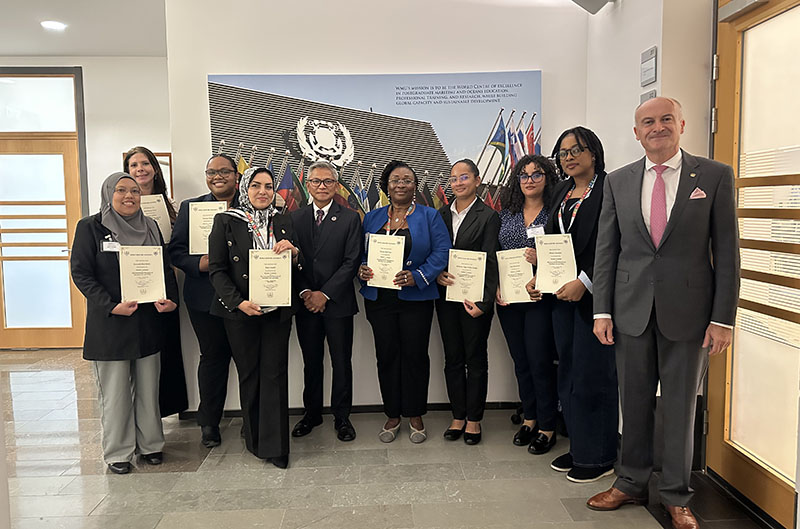

The World Maritime University (WMU) brought together maritime law professionals, public servants, academics, researchers and other participants from 17 countries for the sold out 2026 Summer Academy on The International Dimension of Maritime Law and Policy, held in Malmö from 31 August–4 September.
The five-day programme provided participants with a comprehensive perspective on contemporary maritime law and policy, examining maritime claims within the wider context of the increasingly complex regulatory, technological and commercial environment in which shipping operates.
A broad range of topics were addressed throughout the programme, including current challenges for shipping, new technologies, liability, regulatory compliance and commercial relationships, and maritime claims. Participants also explored ship registration, marine insurance, decarbonization, compulsory liability, sanctions compliance, electronic transport documents, cyberthreats and the legal challenges associated with autonomous ships.
The programme was coordinated by WMU Professor George Theocharidis and delivered by WMU faculty and an extensive roster of external experts. The Academy also welcomed Sir Stephen Males, Lord Justice at the Court of Appeal of England and Wales, as special guest, who introduced the programme and presented certificates to participants upon completion.
The interdisciplinary programme highlighted the increasingly interconnected nature of maritime law, where legal and regulatory frameworks must respond to technological change, environmental challenges, evolving commercial practices and new risks facing the shipping sector. Participants considered issues ranging from sanctions and maritime disruption to the legal implications of autonomous ships, electronic documentation and cyberthreats.
The Summer Academy also examined the international dimensions of maritime dispute resolution and claims, including arbitration, ship arrest and judicial sale, transboundary maritime bankruptcies, the satisfaction and enforcement of claims, salvage and collision liability, and the jurisdiction of the International Tribunal for the Law of the Sea (ITLOS).
Of the 25 participants, eight women from developing countries attended through scholarships provided by the International Maritime Organization (IMO), while the Government of Sweden generously sponsored the participation of five Coast Guard officers from Ukraine.
The programme reflects WMU’s role in bringing together academic, professional and governmental perspectives to examine complex legal and policy issues affecting the maritime sector. By connecting established principles of maritime law with emerging challenges such as decarbonization, digitalization and autonomous shipping, the Academy provided participants with an opportunity to deepen their understanding of the evolving legal landscape and its practical implications.
About the WMU Summer Academy
The World Maritime University (WMU) is founded within the framework of the International Maritime Organization (IMO), a specialized agency of the United Nations. With its international and interdisciplinary environment, WMU brings together academics, researchers, maritime professionals and industry experts to explore emerging issues and develop knowledge and solutions for the maritime and oceans sectors.
The WMU Summer Academy provides an opportunity for participants from around the world to exchange knowledge, engage with leading experts and explore practical responses to issues of current importance. Each year, a series of intensive programmes addresses key topics shaping the future of the maritime and oceans sectors.


