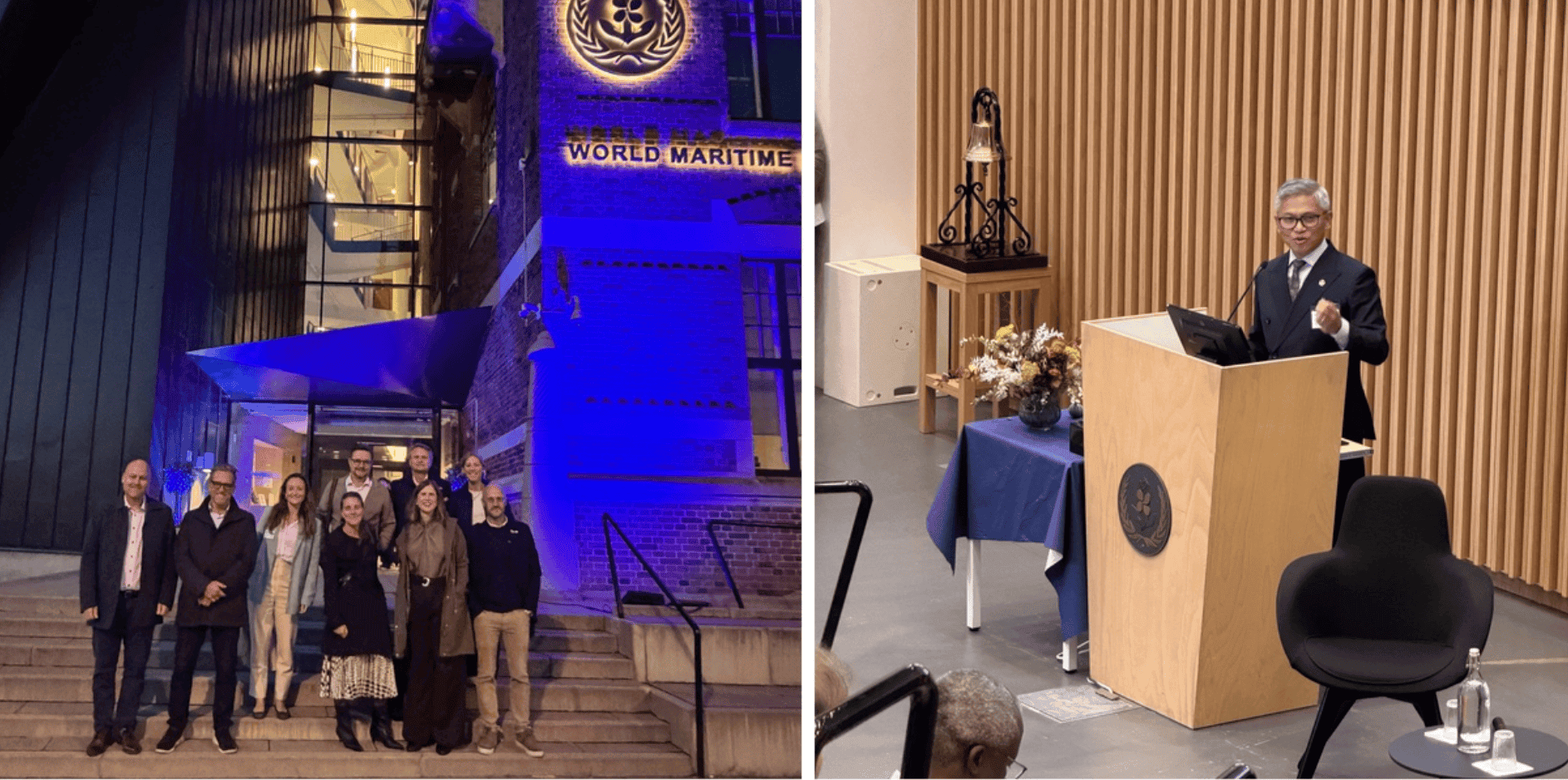
WMU Hosts Sweden’s Maritime Forum World Maritime Day Event
The World Maritime University (WMU) hosted the Swedish Maritime Forum’s (Maritimt Forum) World Maritime Day 2026 event in Malmö, on 24 September bringing together representatives from Sweden's industry, government, academia and maritime organizations to discuss how policy and regulation can be translated into practical action across the maritime sector.
Held under the 2026-2027 World Maritime Day theme From Policy to Practice: Powering Maritime Excellence, the event explored key issues shaping the future of shipping, including maritime safety, decarbonization, technological development and the evolving skills required in the sector.
Professor Maximo Q. Mejia, Jr, President of WMU, delivered the opening remarks and presented WMU's mission and impact. WMU was further represented by Professor Michael Manuel, Vice President (Provost ) who made a presentation on Global Partnershps for Successful IMO Implementation, and Professor Henning Jessen who joined a panel discussion on SOLAS and the IMO's work on safety and security issues, cyber risk management, navigation and GPS interference.
Discussions highlighted how international regulations can provide direction for innovation and investment, while also addressing the practical challenges of implementation. Maritime safety was a particular focus, with discussions on cybersecurity and disruptions to satellite-based navigation systems. The importance of resilient systems and maintaining traditional navigation skills alongside digital technologies was emphasized.
The transition towards lower-emission shipping was also central to the discussions, with energy efficiency, alternative fuels and infrastructure among the topics addressed. Speakers highlighted the need for stable regulatory frameworks and close cooperation between ports, shipowners, authorities and technology providers to support long-term investment and progress.
The event also considered how education and training must evolve alongside technological change. Digitalization, automation and new energy systems are creating new competency requirements, increasing the importance of combining practical experience with advanced simulator-based training.
The discussions throughout the day underscored the importance of collaboration across the maritime sector. Bringing together different areas of expertise and experience is essential to turning policy ambitions into practical solutions and supporting a safer, more sustainable and resilient maritime future.