

WMU Joins EMSA and IMO to Shape Seafarer Training for Alternative Fuels and New Technologies
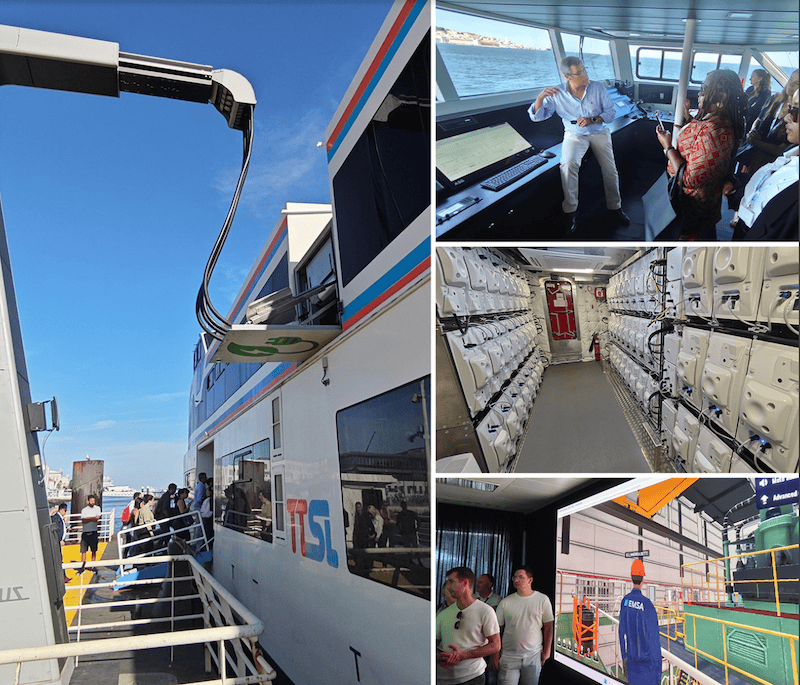
The World Maritime University (WMU) supported a joint regional event with the International Maritime Organization (IMO) and the European Maritime Safety Agency (EMSA) from 14 to 18 September in Lisbon, Portugal. The event focused on the evolving competence and training needs of seafarers as the global maritime sector transitions toward alternative fuels and emerging decarbonization technologies.
Delivered under the IMO Integrated Technical Cooperation Programme (ITCP), the event brought together representatives from maritime administrations, industry, maritime education and training (MET) institutions, international organizations, and academia. Participants examined how competence frameworks and training standards must adapt alongside rapid technological and operational advancements.
The five-day event featured key discussions on training requirements associated with zero- and low-carbon fuels and innovative onboard systems, including ammonia, methanol, hydrogen, batteries, and onboard carbon capture systems. Key insights were shared regarding ongoing initiatives at IMO, notably the comprehensive review of the 1978 International Convention on Standards of Training, Certification and Watchkeeping for Seafarers (STCW Convention) and Code, as well as the ongoing development of targeted training provisions for seafarers serving on ships using alternative energy sources.
WMU highlighted that the pace of change varies widely from region to region, shaped by differences in fuel availability, bunkering infrastructure, training capacity, and the readiness of maritime administrations and training institutions. As an implementing partner of the IMO, WMU coordinates and designs regional training programmes worldwide, work it has carried out in 2025 with MTCC Asia and, most recently, in a regional seminar with MTCC Caribbean on alternative fuels. The Lisbon event extends that work into direct dialogue with EMSA and the wider European maritime community.
Complementing the pedagogical, technical, regulatory discussions, EMSA organized site visits giving participants practical insights into real-world applications of novel marine technology and modern training facilities. These included visits to a battery-powered vessel, its e-Lab, state-of-the-art virtual reality (VR) training facilities, and the European Maritime Awareness Centre (EMAC).
Thirteen participants were invited by IMO and represented 8 Member States - Algeria, Egypt, Cote D'Ivoire, Georgia, Morocco, Tunisia, Türkiye and Saudi Arabia. Women represented 6 of the participants, or 46 per cent of the cohort. WMU faculty contributing to the seminar included Professor Momoko Kitada, Professor Aykut I. Ölcer, Professor Dong Cheng, and Lecturer Anne Pazaver.
Through its continued partnership with IMO, EMSA, and global maritime stakeholders, WMU remains dedicated to advancing maritime education, research, and capacity development to ensure a safe, sustainable, and skilled workforce for the future of shipping.


