



PhD., University of Alberta, Edmonton, Canada
BA., Universidad Nacional de Cuyo, Mendoza, Argentina
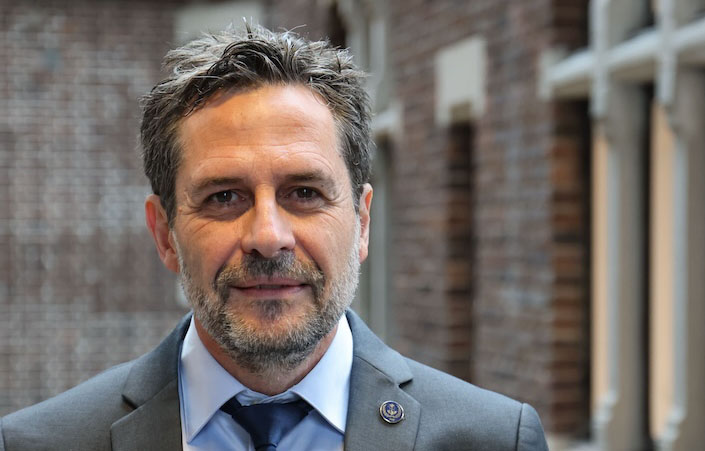
Claudio Aporta was born and raised in Mendoza, Argentina, where he completed a BA in Communication at Universidad Nacional de Cuyo. He moved to Canada in 1997 and earned a Ph.D. in Anthropology from the University of Alberta, followed by a Postdoctoral Fellowship at Université Laval, Quebec. He taught at Carleton University (2005–2013) and Dalhousie University’s Marine Affairs Program (2013–2021), and held the Canada–US Fulbright Chair at the University of Washington in 2012.
His research sits at the intersection of Marine Governance, Anthropology, and Geography.
Since 1998, Claudio has conducted ethnographic research in the Canadian Arctic, documenting Inuit knowledge and the use of marine and coastal areas, and exploring the spatial and cultural dimensions of Indigenous environmental knowledge. His current research and teaching focuses on co-management, Marine Spatial Planning, Indigenous and local coastal communities’ knowledge, and knowledge mobilization in cross-cultural contexts. Ongoing projects include documenting Inuit mobility networks in Arctic Canada, studying the cultural dimensions of shipping, and examining Inuit contributions to the development of safe navigation practices in the region.
Claudio Aporta was born and raised in Mendoza, Argentina, where he completed a BA in Communication at Universidad Nacional de Cuyo. He moved to Canada in 1997 and earned a Ph.D. in Anthropology from the University of Alberta, followed by a Postdoctoral Fellowship at Université Laval, Quebec. He taught at Carleton University (2005–2013) and Dalhousie University’s Marine Affairs Program (2013–2021), and held the Canada–US Fulbright Chair at the University of Washington in 2012.
His research sits at the intersection of Marine Governance, Anthropology, and Geography.
Since 1998, Claudio has conducted ethnographic research in the Canadian Arctic, documenting Inuit knowledge and the use of marine and coastal areas, and exploring the spatial and cultural dimensions of Indigenous environmental knowledge. His current research and teaching focuses on co-management, Marine Spatial Planning, Indigenous and local coastal communities’ knowledge, and knowledge mobilization in cross-cultural contexts. Ongoing projects include documenting Inuit mobility networks in Arctic Canada, studying the cultural dimensions of shipping, and examining Inuit contributions to the development of safe navigation practices in the region.

