

Day of the Seafarer 2026 - Carrying World Trade. Carrying the Risks.
The Day of the Seafarer is celebrated annually on 25 June. Its stated purpose is to recognize the unique contribution made by seafarers from all over the world to international seaborne trade, the world economy and civil society as a whole.
The 2026 theme, “Carrying world trade. Carrying the risks”, highlights the hardship, pressure and risks of life at sea, especially in high‑risk and conflict‑affected areas, while underscoring seafarers’ essential role in keeping global trade moving.
In recognition of Day of the Seafarer 2026, Professor Maximo Q. Mejia, Jr., President of the World Maritime University (WMU) provided the following video message:
“On this Day of the Seafarer, we recognize the skill, dedication and resilience of the world’s seafarers who keep global trade moving for the benefit of us all.
In today’s geopolitical landscape, this year's theme, "Carrying world trade. Carrying the risks," is particularly poignant, reminding us of the challenges that go beyond demanding physical work, unpredictable conditions and long periods away from loved ones.
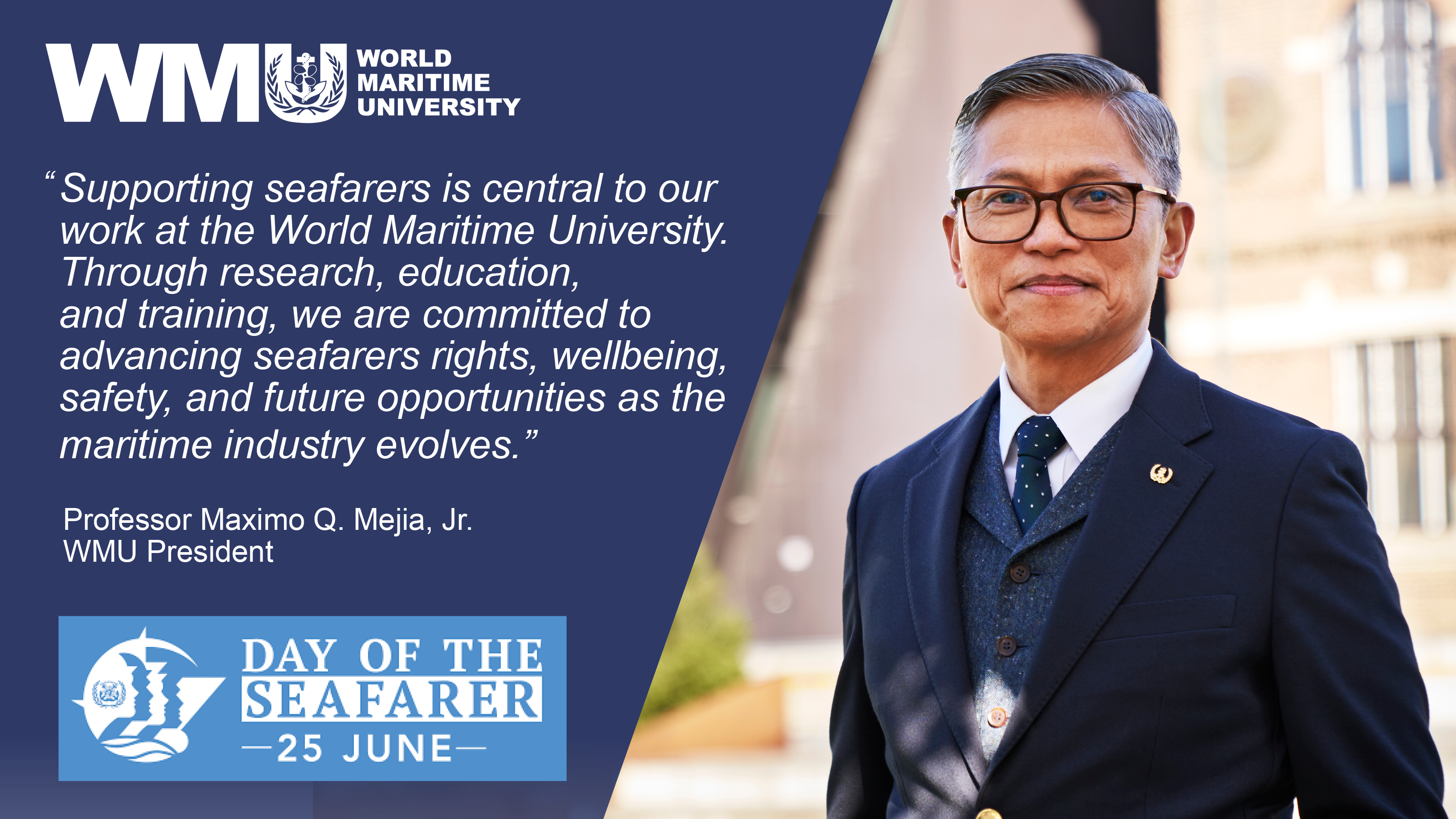
Supporting seafarers is central to our work at the World Maritime University. Through research, education, and training, we are committed to advancing seafarers rights, wellbeing, safety, and future opportunities as the maritime industry evolves.
From decent work conditions and seafarer abandonment, to technology and future skills, our research is quantifying the realities of life at sea—including shore leave, mental wellbeing, work and rest hours, workforce sustainability, and the impact of new technologies.
Our latest research underscores the necessity of digital skills training across the sector. In a rapidly changing maritime sector, we must ensure that seafarers are equipped to meet today's challenges, as well as thrive in tomorrow's industry.
Today, we thank seafarers everywhere for your service and commitment, which quietly underpins our modern lives.
WMU celebrates your contribution, and reaffirms our commitment to advocating for you—today and always.”
To view the recorded message, click here.
WMU SUPPORTING SEAFARERS
Research, education, and training on seafarers’ safety, security, skills, wellbeing, and welfare are core to the World Maritime University (WMU).
WMU research continues to provide evidence on the realities of sea-life balance and to inform policy and practice across the maritime sector, including gender equality. Work with the ITF Seafarers’ Trust highlights persistent challenges around shore leave, with many seafarers still reporting limited or no time ashore during their contracts.
WMU also undertakes research on the future of maritime work and skills, including a broader understanding of the maritime sector, including the effects of the COVID-19 pandemic on seafarers. A forthcoming global study on digital skills in maritime education and training, commissioned through the Lloyd’s Register Foundation Global Maritime Trends programme. This work examines how the sector is preparing for rapid technological change and the implications for education, training, and workforce readiness.
Other research focuses on the sustainability of the maritime workforce, including strengthening pathways through investment in Africa’s maritime talent and increasing opportunities for women in the sector, alongside broader analysis of automation and future skills.
In parallel, WMU examines working conditions, including hours of work and rest, mental health and wellbeing, and emerging risks such as technostress associated with digitalization. A new research initiative on seafarer abandonment is also underway, aimed at strengthening understanding of implementation gaps in existing international protections.
WMU also offers health and wellbeing Executive and Professional Development Courses designed to provide seafarers and ship management teams with insights into personal and organizational factors influencing mental health and wellbeing.
WMU further contributes to capacity development through training frameworks for alternative-fuelled shipping and professional programmes focused on wellbeing, mental health, and safe operations at sea.
Together, these activities reflect WMU’s commitment to evidence-based action in support of decent work for seafarers and the long-term sustainability of the maritime profession.


